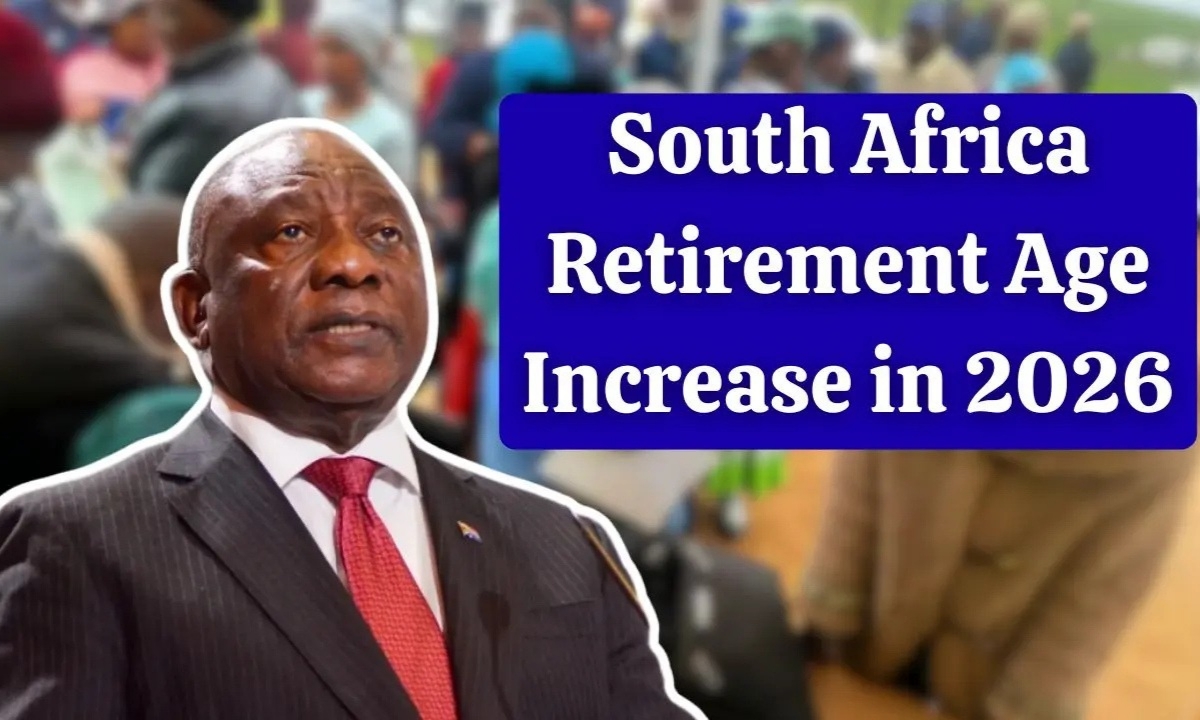
Changes in South Africa’s retirement age framework are anticipated to take place as early as 2026, which could have an impact on millions of employees in public and private sectors. The restructuring of the retirement age is one of the measures being considered under the umbrella of the sustainability of the pension system and the longer-lived population. The matter has been discussed vigorously, but it is a clear indication of a change in retirement planning for the future.
Why the Retirement Age Is Being Reviewed
Increased life expectancy and the subsequent pressure on pension schemes are the main reasons behind increasing the retirement age. Because of the longer-lived population, South African pension benefits are paid over longer periods, thus increasing the financial pressure on pension funds and government-supported programs. Policymakers believe that if the working age is increased, the problem of contributions not coinciding with benefits will be solved, thus minimizing risks of funding in the long run.

What the Current Retirement Rules Are
Retirement age in South Africa is still primarily determined by employment contracts and pension fund regulations. In most cases, the retirement age is set either at 60 or 65 years, but it varies according to the sector and fund policies. Options for early and late retirement are already available and they provide workers with the necessary flexibility to leave the job when they want. However, there is no law mandating a single retirement age increase that applies to all workers—no such law has been enacted yet.

What Could Change From 2026
If reforms are implemented, the increase in retirement age will be a gradual process. This will give the workers enough time to shift their half and career planning accordingly. The changes can vary such as new pension contribution periods, revising the method of calculating benefits, and allowing employees to be in the workforce for a longer time. New arrangements may be designed to guard the workers who are close to retiring.

How Workers May Be Affected
Among others, a higher retirement age will imply more years of income and better pension benefits for the majority of workers. However, it also entails shifting of long-term savings, health, and career development planning. Those who work in physically demanding environments will find it the toughest; therefore, they will need pension options as well as supportive policies in the workplace.

Impact on Employers and the Economy
Longer tenure of the experienced staff will not only help the company to overcome skills shortages but will also enable the transfer of knowledge. The employers might have to come up with a variety of measures such as telecommuting, offering retraining, and implementing age-friendly policies. On the other hand, from the economy’s perspective, the increased workforce participation could be used to boost productivity and cut down on the need for social welfare.
Planning Ahead for Retirement
It is important for the workers to keep track of changes through the official updates from the government and pension funds. Getting the help of financial advisors and reviewing your retirement plan at an early stage will make it easier to adapt to changes that may come. Although the debates are still going on, planning ahead is still the most effective way to deal with the changing retirement scenery in South Africa after 2026.
Also Read: SASSA R560 Grant January 2026: Eligibility Rules And Payment Guide